


The Ultimate Tin Packaging Guide for the Food Industry
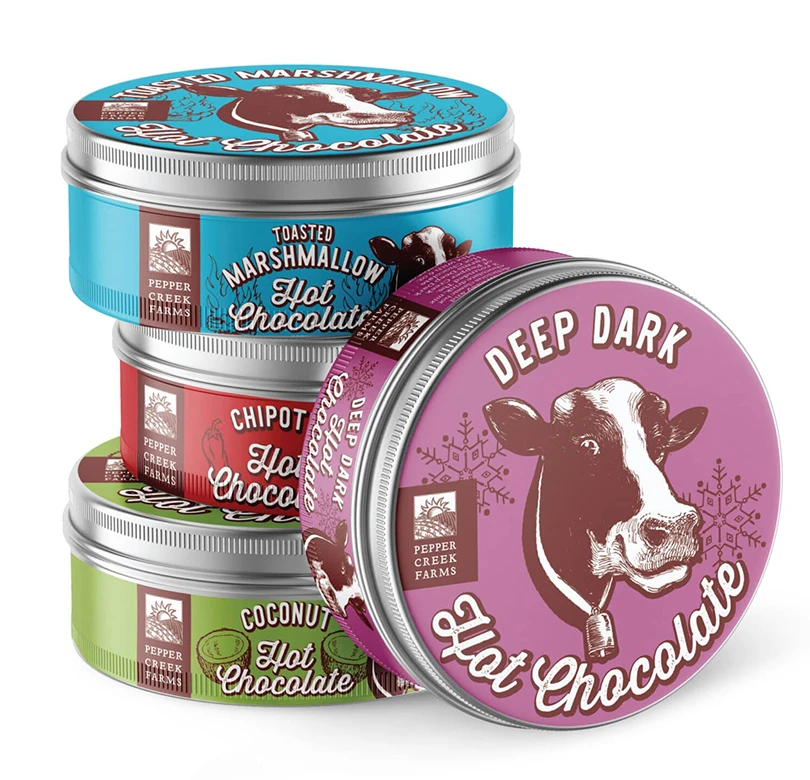
Packaging plays a vital role in today's food industry because it offers food safety, extends shelf life, and enhances brand identity. Over the past few decades, tin food packaging has proven to be a trusted choice. Food brands worldwide use tin containers to keep their products fresh and add a premium look to their products.
But what makes tin packaging so special for food items?
Why do food brands choose it over plastic or glass?
To answer all your queries and confusion, we've written this guide to help you understand everything you need to know about tin packaging. In this blog, you will learn about its benefits, types, sustainability, supplier selection, and future trends. Our guide will help you decide if tin containers are right for your brand in the food industry.
Keep reading until the end; it will give you the most useful information about metal food packaging.
Why Food Brands Trust Tin Packaging?
Custom food tins offer numerous advantages, making them an ideal choice for the food industry. These metal containers are strong and resist all types of damage. They help keep food products safe during transportation and storage.
Here’s why it's an excellent choice for the food industry.
Excellent Food Preservation
Tin containers protect food from light, air, and moisture, which can degrade food quality. Because of this, they are perfect for preserving the freshness, flavor, and aroma of food products for a longer period. In contrast to plastic, which is prone to leaching chemicals into food over time, tin is a sturdy material that ensures food safety and taste quality. Additionally, the ability of tin containers to seal tightly reduces oxidation, which is crucial to food preservation.
Durability & Strength
Tin packaging is popular among food brands for shipping overseas because it is impact-resistant. In spite of pressure, tins are highly durable, resistant to dents, and capable of maintaining their structure. When compared with glass packaging, which is fragile and susceptible to breakage, tin packaging guarantees the safe transportation and storage of food products. Additionally, tin food packaging avoids the need for excessive outer packaging, reducing material waste and shipping costs.
Aesthetic Appeal & Branding Opportunities
Tin packaging is an excellent way to showcase food products because it offers high-quality printing and embossing options. With custom artwork, vivid colors, and intricate designs, food brands can enhance their packaging to stand out on shelves and increase consumer appeal.
There are several unique customization options available with tin packaging, including:
Embossing & Debossing: Enhances the tactile appeal of packaging.
Metallic & Matte Finishes: Creates a lavish appearance that appeals to high-end customers.
Custom Shapes & Sizes: Brands can design packaging that is exclusive and eye-catching.
Windowed Tins: Maintains the freshness of the product while allowing a glimpse inside.
Eco-Friendliness & Sustainability
Eco-friendliness is one of the biggest benefits of food grade tin containers. The quality of sustainable tin packaging doesn't degrade when it is reused and is infinitely recyclable. In this way, waste is reduced and the circular economy is strengthened. Consumers are demanding sustainable and environmentally friendly packaging from brands, leading them to switch to tin packaging.
Material | Recycling Rate (%) |
Tin (Steel Packaging) | 73.8% (EPA 2018 Data) |
Aluminum | ~50% |
Plastic | ~9% |
Glass | ~33% |
Today, 75% of all aluminum ever produced is still in use. [Source: https://www.aluminum.org/Recycling]
Tamper-Proof & Secure
The closures on tin packaging can be airtight and tamper-evident, ensuring the product's integrity. The protection of food safety is especially important since it prevents contamination, spoilage, and unauthorized access to products.
Comparison Table: Tin Packaging vs. Other Packaging Materials
Feature | Tin Packaging | Plastic Packaging | Glass Packaging |
Durability | High (impact-resistant) | Low (easily cracks) | Fragile (breakable) |
Food Safety | BPA-free, no chemical leaching | Can leach chemicals | Safe but heavy |
Recyclability | 100% recyclable, sustainable | Often non-recyclable | Recyclable but energy-intensive |
Shelf Life Extension | Excellent (airtight) | Moderate | Excellent (airtight) |
Branding & Aesthetics | High-quality printing, embossing, custom shapes | Basic printing | Elegant but limited options |
12 Modern Types of Tin Food Packaging
Tin packaging for food is a versatile and durable option used across various industries. It provides excellent protection against external contaminants and preserves the freshness of food products for a long time.
Here are some common tin packaging types:
Round Tins
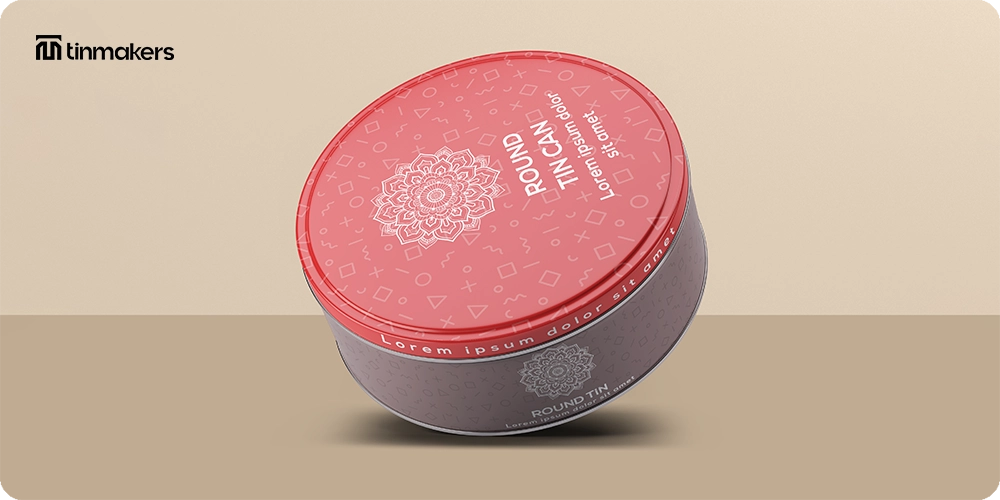
Suitable for cookies, mints, and candies, custom round tins provide a sleek and classic packaging solution. Generally, bakeries and confectionery brands use these tins to package their products in a premium manner.
Square Tins
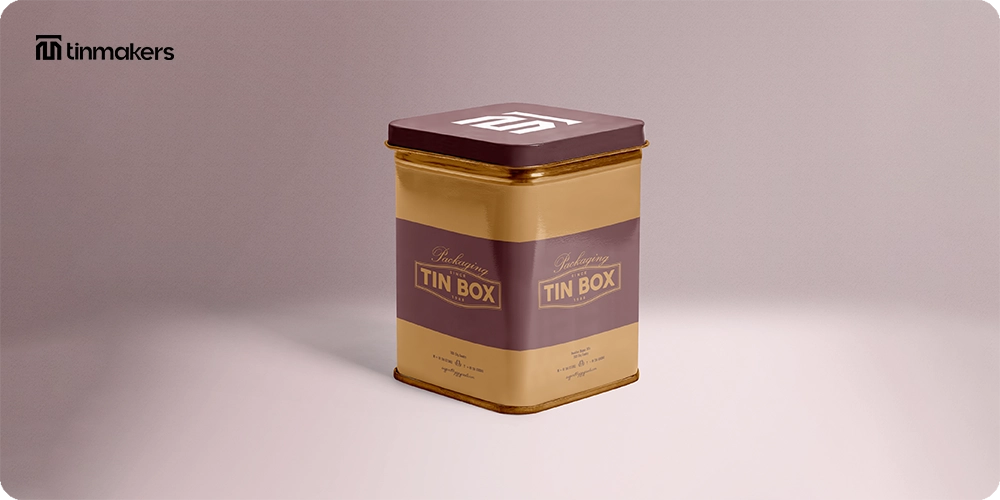
Square metal containers are perfect for storing tea, coffee, and powdered foods. They are space-saving and can be organized and stored easily. Gourmet food items also tend to be packaged in square tins since they make label placement and branding easier.
Rectangular Tins
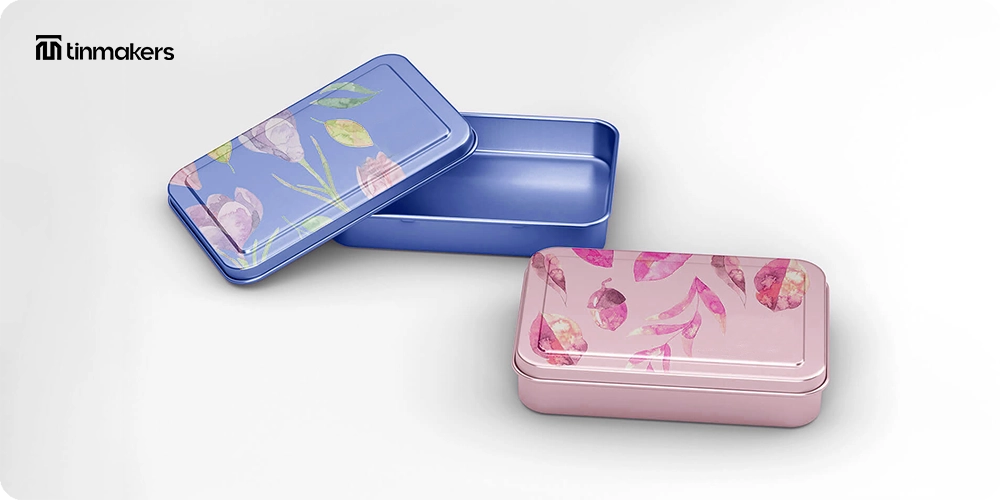
Tins with rectangular shapes provide ample branding space for chocolates, biscuits, and gourmet gift sets. Additionally, they are ideal for the organization of foods, such as assorted snack boxes.
Heart-Shaped Tins
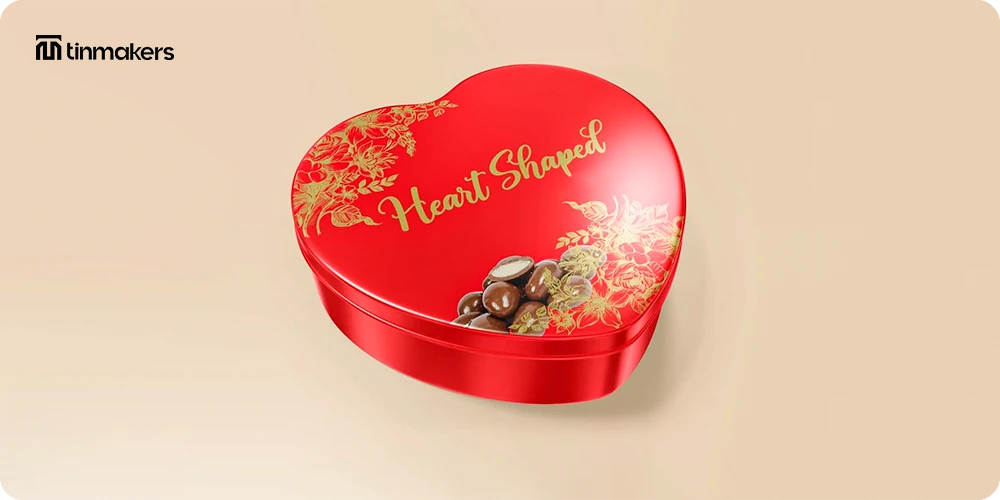
It is a popular option for seasonal products like Valentine's Day chocolates and specialty confections. These heart-shaped metal tins improve the presentation of limited-edition food products and premium gift items.
Cylindrical Tins
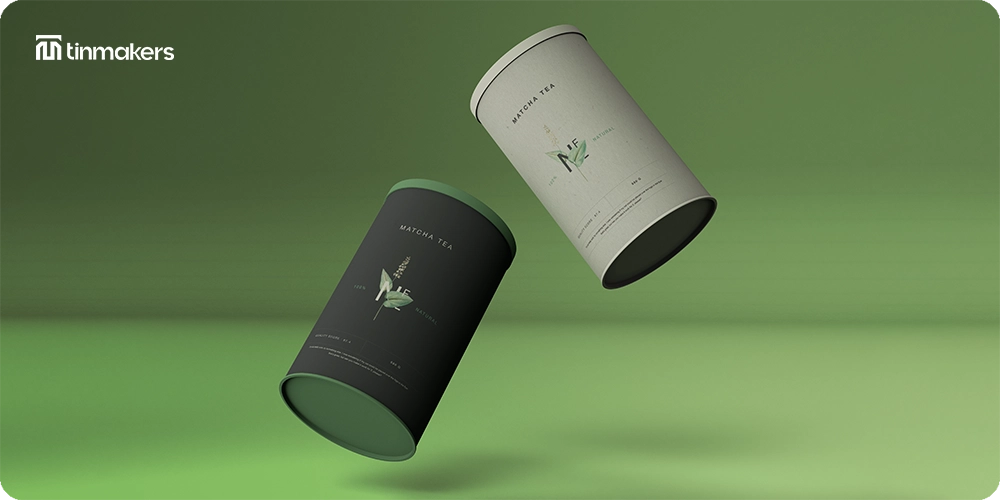
It is common to use cylindrical tins for storing tea, coffee, spices, and other items with a sleek, tall design. Due to their unique shape, they are capable of sealing tightly. Therefore, they prevent air and moisture from compromising the integrity and taste of the food.
Custom-Shaped Tins
Custom-shaped food tins add a unique touch to product packaging for brands that want to stand out. Tins like these support marketing campaigns and are therefore highly collectible.
Hinged-Lid Tins
These tins, designed for candy and mints, keep their contents secure while being easy to open and close. Their convenience and reusability make them a favorite of consumers.
Stackable Tins
In addition to saving space and making transportation easier, stackable tins save you time and money. The containers are commonly used for dry foods such as rice, pasta, and cereals.
Divided Compartment Tins
Tins are ideal for storing snacks, which can be arranged in separate compartments within the same container. Food brands use these types of containers to package nut and chocolate mixes and gourmet food assortments.
Decorative Printed Tins
These custom-printed tins feature high-quality prints and can be personalized for limited-edition and holiday packaging. As a result of their ability to create intricate designs, they are a great choice for seasonal marketing campaigns.
Press-Seal Tins
Featuring an airtight press-seal lid, these tins keep food fresh for long periods. Major food brands use them for ground coffee, loose tea, and specialty powder packaging.
Reusable Food-Grade Tins
Upon consumption, these tins can be repurposed for storage, encouraging sustainability. These reusable food tins are commonly kept for future use, extending their shelf life.
Case Studies: Brands Successfully Using Non-Toxic Tin Packaging
The use of tin food packaging has become a popular option among brands looking to maximize product appeal and promote sustainability. The following case studies examine how various brands have successfully used tin packaging to enhance their brand image and engage customers.
1. Twinings (Tea)
Twinings is a renowned British tea brand that uses decorative tin packaging for its specialty and seasonal tea blends. In addition to preserving freshness, these tins shield products from light and moisture, and they serve as collectible keepsakes. There is a particular appeal to their limited-edition holiday tins, which feature festive designs.
2. Royal Dansk (Danish Butter Cookies)
The iconic blue tin filled with buttery cookies of Royal Dansk is a symbol of nostalgia and tradition around the world. With its airtight design, the tin ensures crispness and longevity, even though it can be repurposed for storage.
3. Altoids (Mints)
Known for its "curiously strong" mints, Altoids uses small, durable tin containers to keep the product fresh and portable. Tins with hinged designs and bold branding are instantly recognizable, and their reusability aligns with green consumer trends. Often, collectors use them for pins or pills as repurposed items.
4. Fortnum & Mason (Luxury Teas & Biscuits)
In addition to hand-painted tins, Fortnum & Mason packages its premium teas in ornate, hand-illustrated packaging. The tins are designed to emphasize heritage and sophistication, making them appealing to high-end shoppers. As well as promoting sustainability, the brand encourages customers to reuse tins for pantry decor or pantry storage.
5. Reese Specialty Foods (Antipasto & Olives)
Reese Specialty Foods uses tin cans for its antipasto, olives, and gourmet snacks, ensuring long shelf life and robust protection during shipping. These vintage-inspired tins appeal to food enthusiasts seeking premium pantry staples due to their artisanal quality.
There is a great deal of versatility and effectiveness in tin packaging across a wide range of food sectors, as discussed in these case studies. These brands have successfully engaged consumers by focusing not only on functionality but also on aesthetic appeal.
What Are Future Trends in Tin Food Packaging?
As with any industry, the food packaging industry is constantly evolving, and recyclable tin packaging is no different. With sustainability, convenience, and innovation taking center stage, the following trends are shaping the future of tin food packaging:
Increased Focus on Sustainability
Eco-friendly packaging is becoming increasingly important as environmental concerns grow. The future of tin food packaging will emphasize recycling, biodegradable coatings, and reducing waste. A growing number of companies are also examining lightweight tin designs to reduce carbon emissions during transportation.
Smart Packaging Technology
The tin packaging industry is getting smarter! It is becoming more common in tin food containers to include QR codes, NFC chips, and augmented reality (AR) labels. Using these features, consumers can access ingredient information, sourcing information, and interactive brand experiences on packaging.
Minimalist & Functional Designs
It is becoming increasingly popular to package products in a simple yet functional manner. More stackable, reusable, and resealable tins will prioritize convenience as well as maintain a sleek, modern appearance in the future.
Food-Safe Innovations
There is a growing trend in the development of new tin coatings and linings to improve food safety. A BPA-free lining, anti-microbial coating, and oxygen-resisting barrier will assist in the preservation and preservation of food.
Customization & Limited-Edition Packaging
To drive engagement, brands use seasonal designs, collector's editions, and personalized tins. The use of customized tins and interactive packaging elements is set to increase in popularity to grab the attention of niche markets.
Tin food packaging will remain a stylish, functional, and sustainable choice for brands around the world in the future as a result of these trends.
Need Food Tin Food Packaging? Come to Tin Makers Now For the Best Price
If you are looking for premium, affordable, and food-safe tin packaging for your brand, Tin Makers can help! With our high-quality tins, you can protect your food products while also enhancing your brand's image with stunning design and finish elements.
With our leak-proof tins, food products remain fresh for longer by keeping them protected from moisture, light, and air. No matter what you're packaging, our customizable tins ensure your products stand out on the shelf, whether they're cookies, chocolates, spices, tea, coffee, or gourmet snacks.
Why choose Tin Makers for your food packaging?
Food-Safe & BPA-Free Coatings
Premium Custom Printing
Airtight & Leak-Proof Sealing
Eco-Friendly & Recyclable
Strong & Durable
Get the premium metal container packaging you deserve for your food products today with Tin Makers. For the best prices on wholesale tin food containers, contact us now!
Final Thoughts
To conclude today's discussion, tin cans for food continue to be a top choice for the food industry due to their durability, food safety, and premium appeal. It extends shelf life and strengthens brand presentation with high-quality printing and custom shapes. Due to tin's recyclability and reusability, it makes a responsible choice for businesses looking to reduce their environmental footprint.
With the evolution of the food industry, innovations in branded tin packaging will continue to provide food brands throughout the world with sustainable and fashionable packaging solutions. If you're a brand that manufactures chocolates, coffee, tea, or gourmet snacks, then food-grade tin containers are the best choice for you. Now is the time to consider tin packaging as a smart investment for your business and the planet. Contact Tin Makers now.
FAQs
Is tin packaging safe for all types of food?
When coated with food-safe coatings and made of non-BPA materials, tin packaging is safe for food. A protective lining is usually included in food-grade tins to prevent direct contact between the food and metal. It ensures food safety and quality of the food.
Can tin food containers be microwaved?
The use of tin containers and other metal containers in microwaves is not recommended. Metal reflects microwave energy, which can cause sparks, fires, or damage to the appliance. If you are going to reheat food from a tin container, you should transfer it to a microwave-safe dish first.
How long does tin packaging keep food fresh?
While shelf life varies according to food type, tin packaging protects against light, moisture, and air exposure. Coffee and chocolate stay fresh for months when stored in airtight tin packaging. Also, spices stay fresh for years when stored in airtight tin containers.

Liam George Freeman
Liam George Freeman is a seasoned expert in the packaging industry, with a focus on delivering sharp, in-depth contributions that resonate with readers. His deep understanding of tin packaging and its expansion, the diverse types, and global impact, including its role in NASDAQ markets, makes him a true gem of a writer. Liam brings clarity and authenticity to every piece. When he’s not crafting compelling insights for the writer's desk, he will likely be found strategizing over a chessboard, always up for a thoughtful match.





Copyright © 2026 tinmakers. All rights reserved